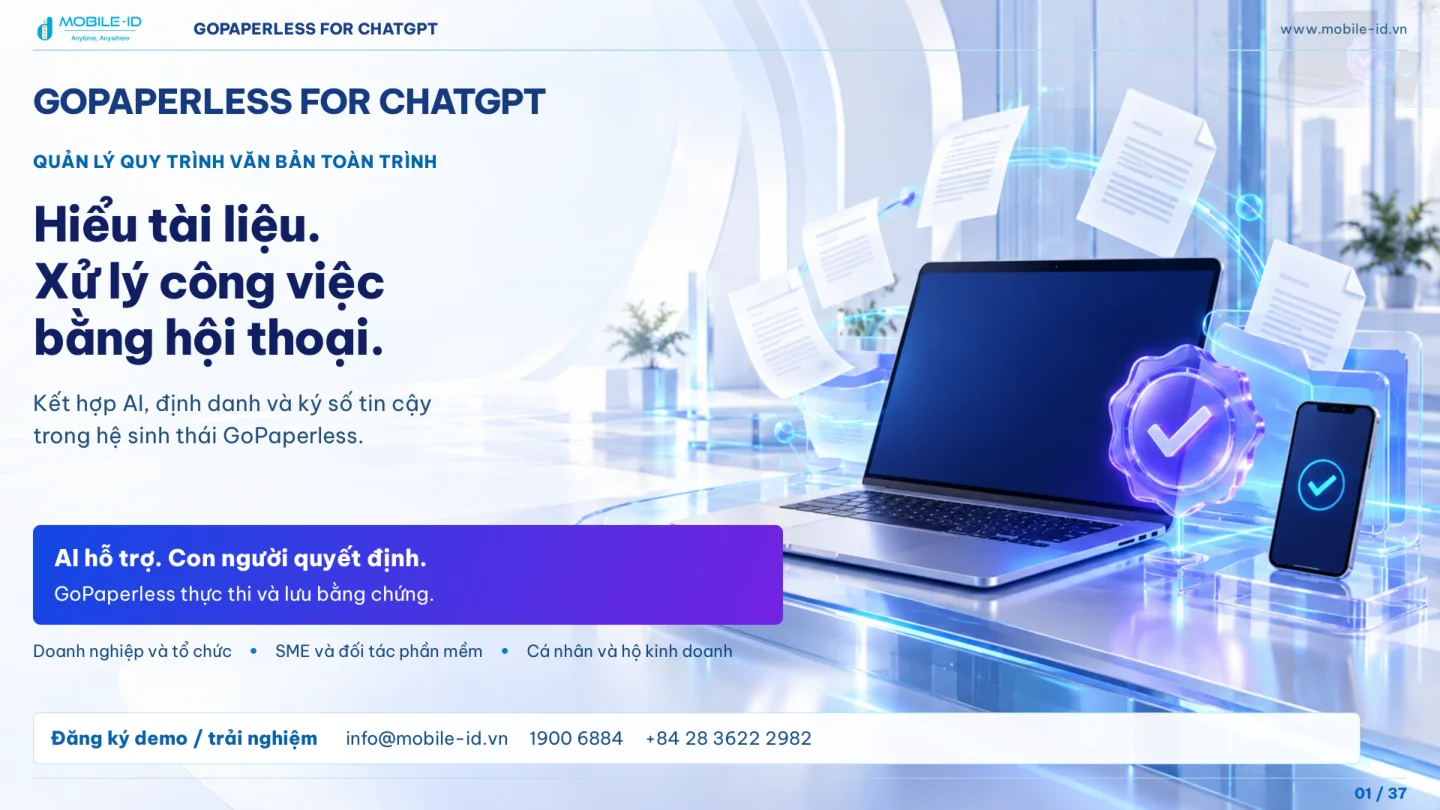
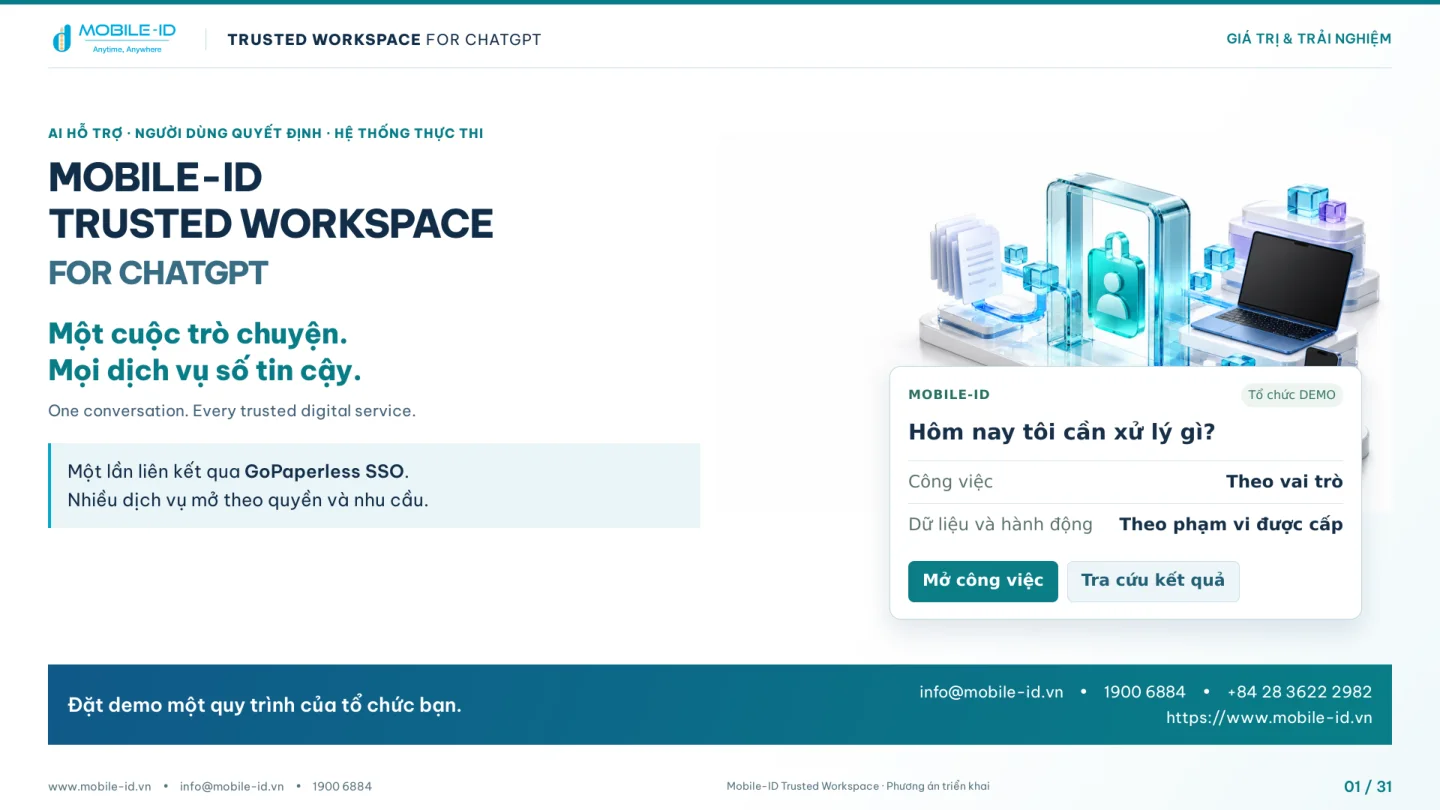
Proposes access to organisational work and Mobile-ID services in ChatGPT. GoPaperless SSO links identities, while each service independently checks permissions, states and prerequisites.
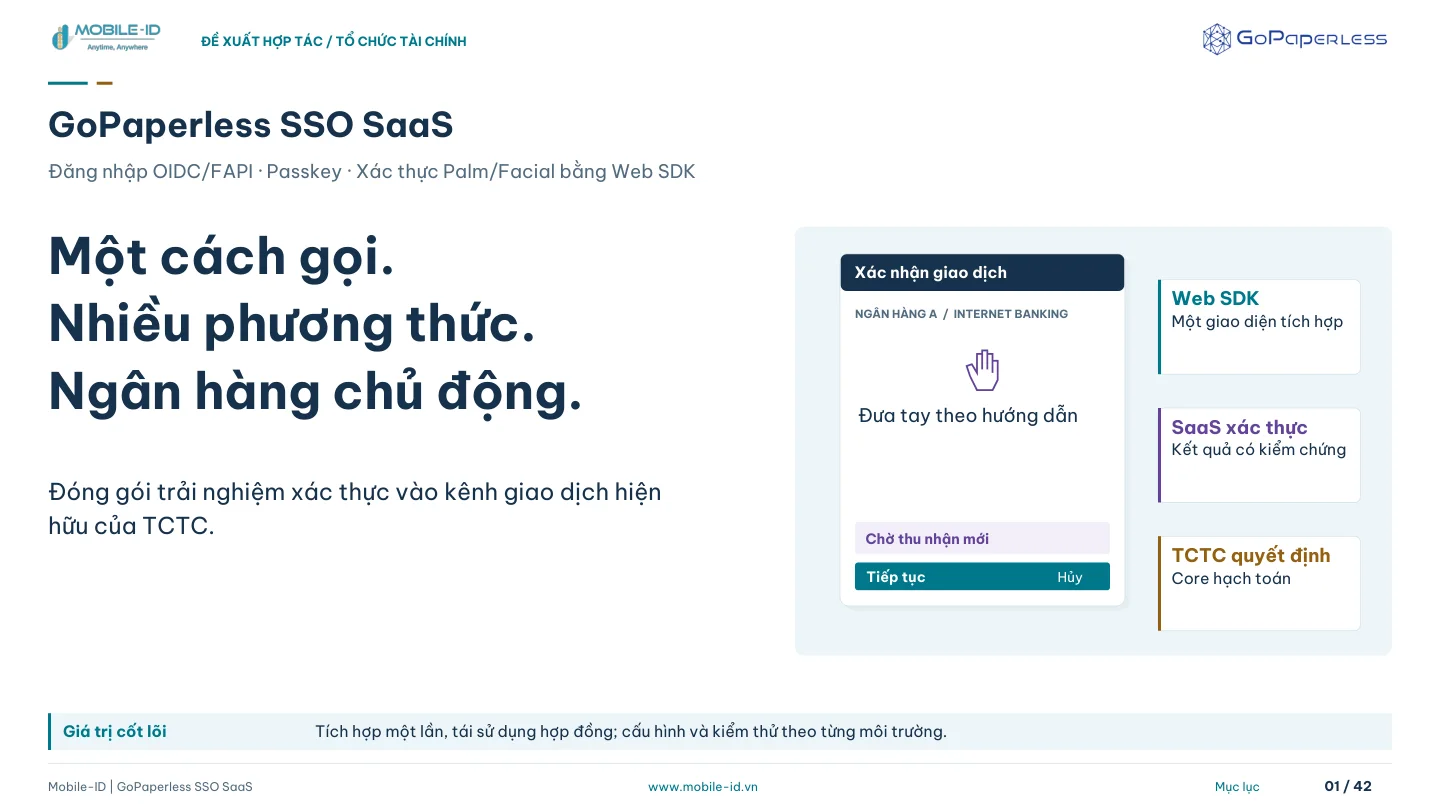
A proposal for adding OIDC/FAPI and Passkey sign-in and Palm/Facial verification to an existing banking channel. Three integration points are separated: BFF for sign-in, Web SDK for interaction and Backend for evidence validation. Transaction decisions and posting remain with the financial institution.
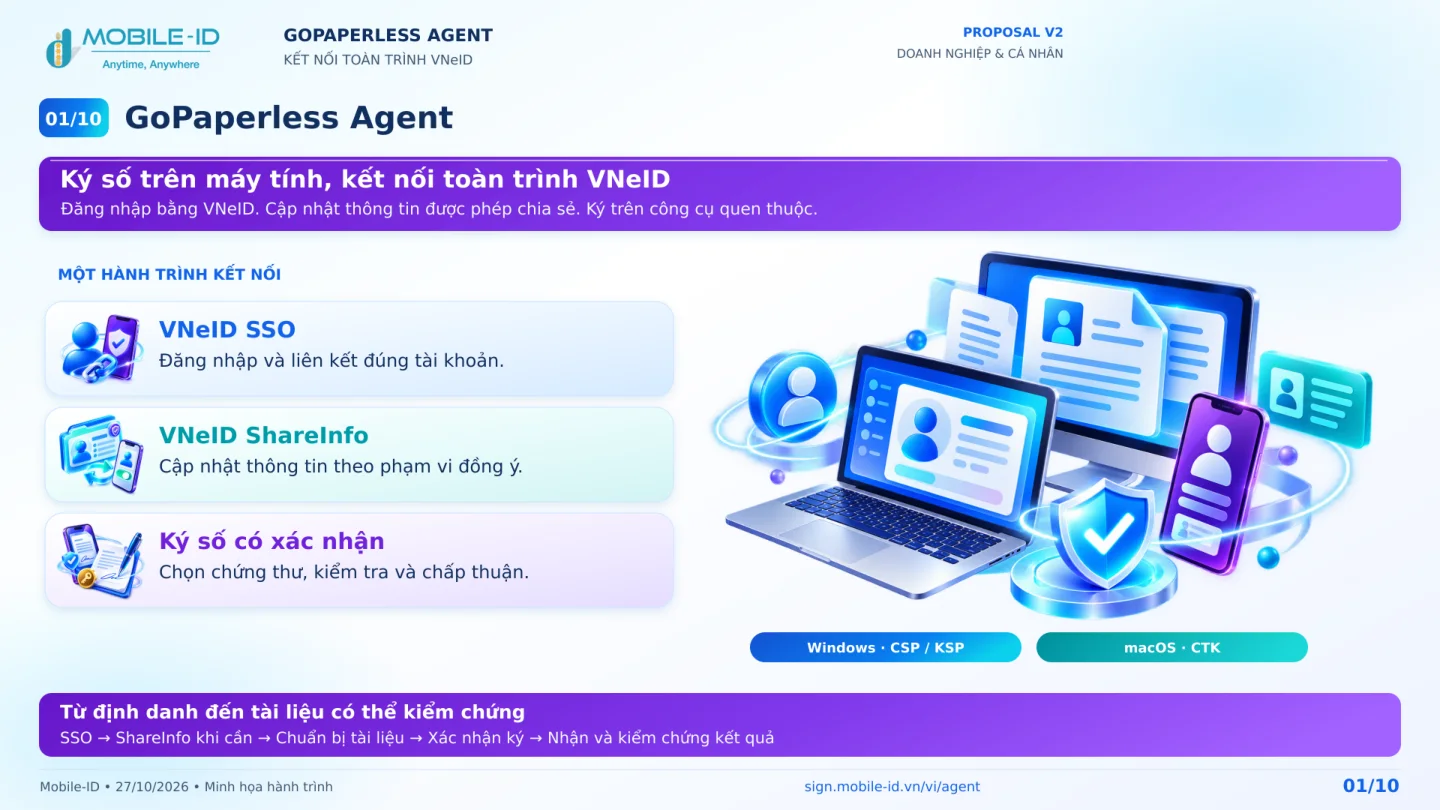
Connects VNeID sign-in, updates from authorised information sharing and signing within familiar desktop tools. The Agent bridges document applications and the configured signing service.
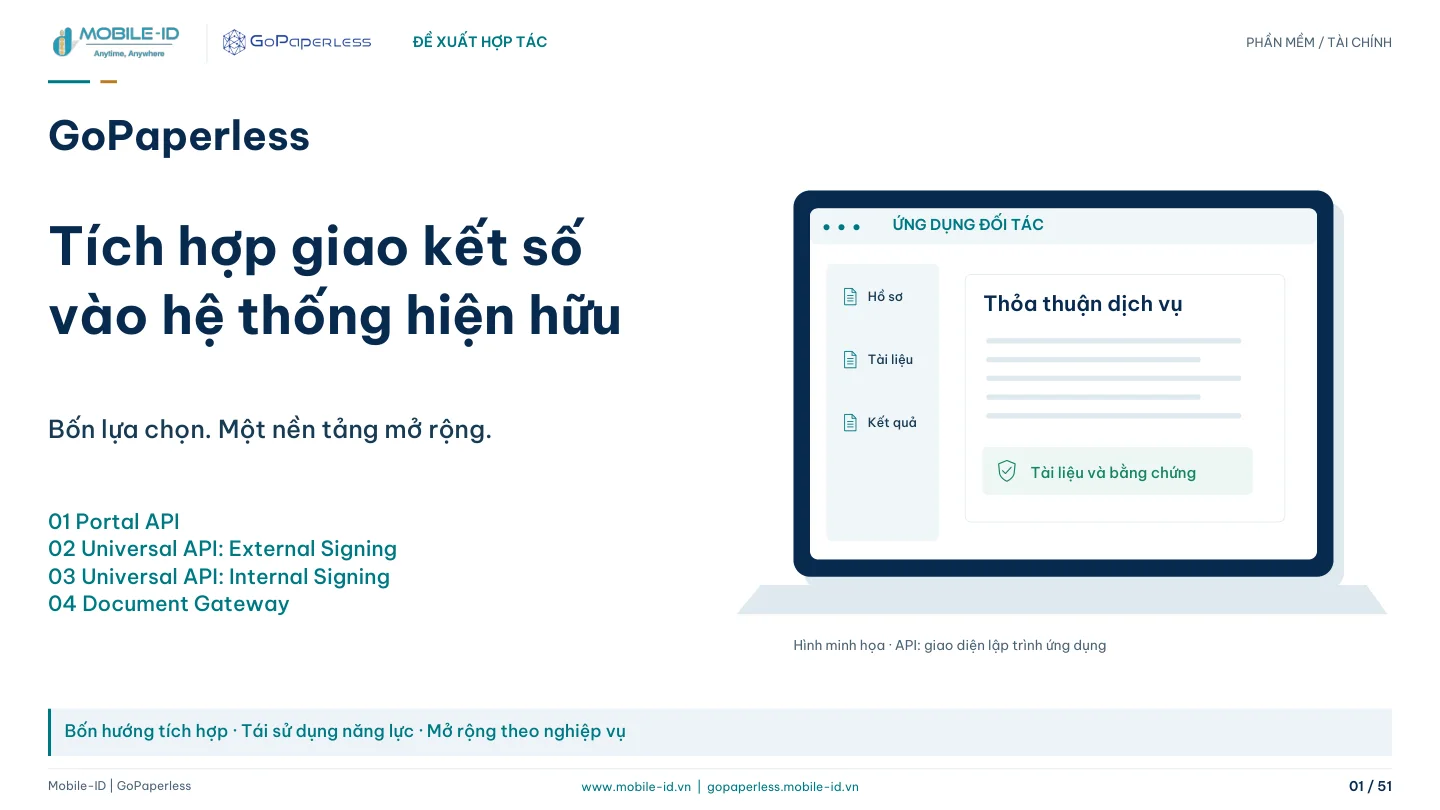
For ISVs and integration teams adding documents, approvals and signing to existing software. Four approaches—Portal API, Universal External Signing, Universal Internal Signing and Document Gateway—are selected by workflow ownership and signer experience.
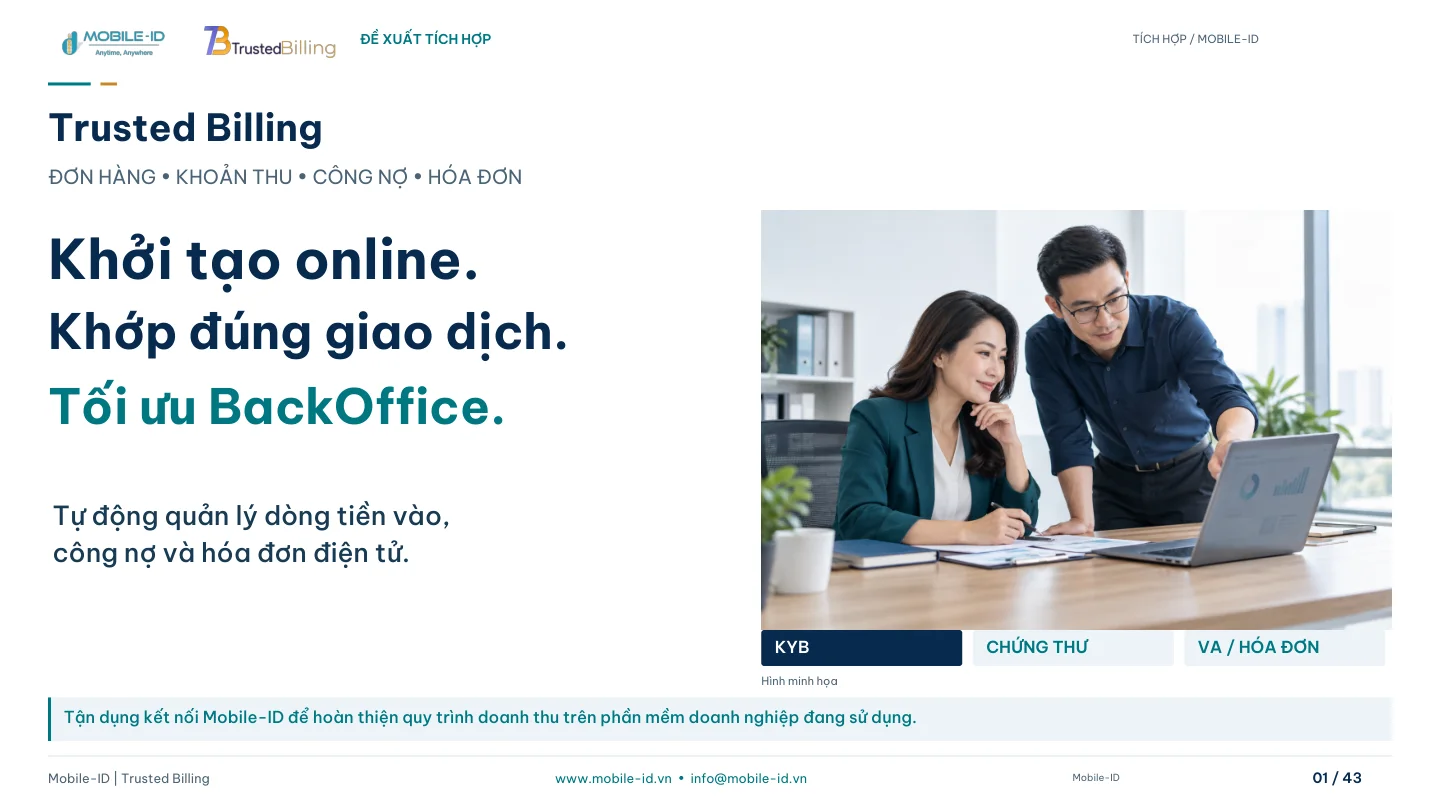
Links orders, collections, receivables and invoices through cross-system references. Trusted Billing coordinates using source data and matching rules, allowing operators to focus on exceptions while accounting systems and banks retain their own authoritative outcomes.
Connects reception, verification, signed records and hospital fees to the existing hospital system. The proposed starting journey is returning-patient reception and fee reconciliation; the HIS remains authoritative for clinical visit creation.
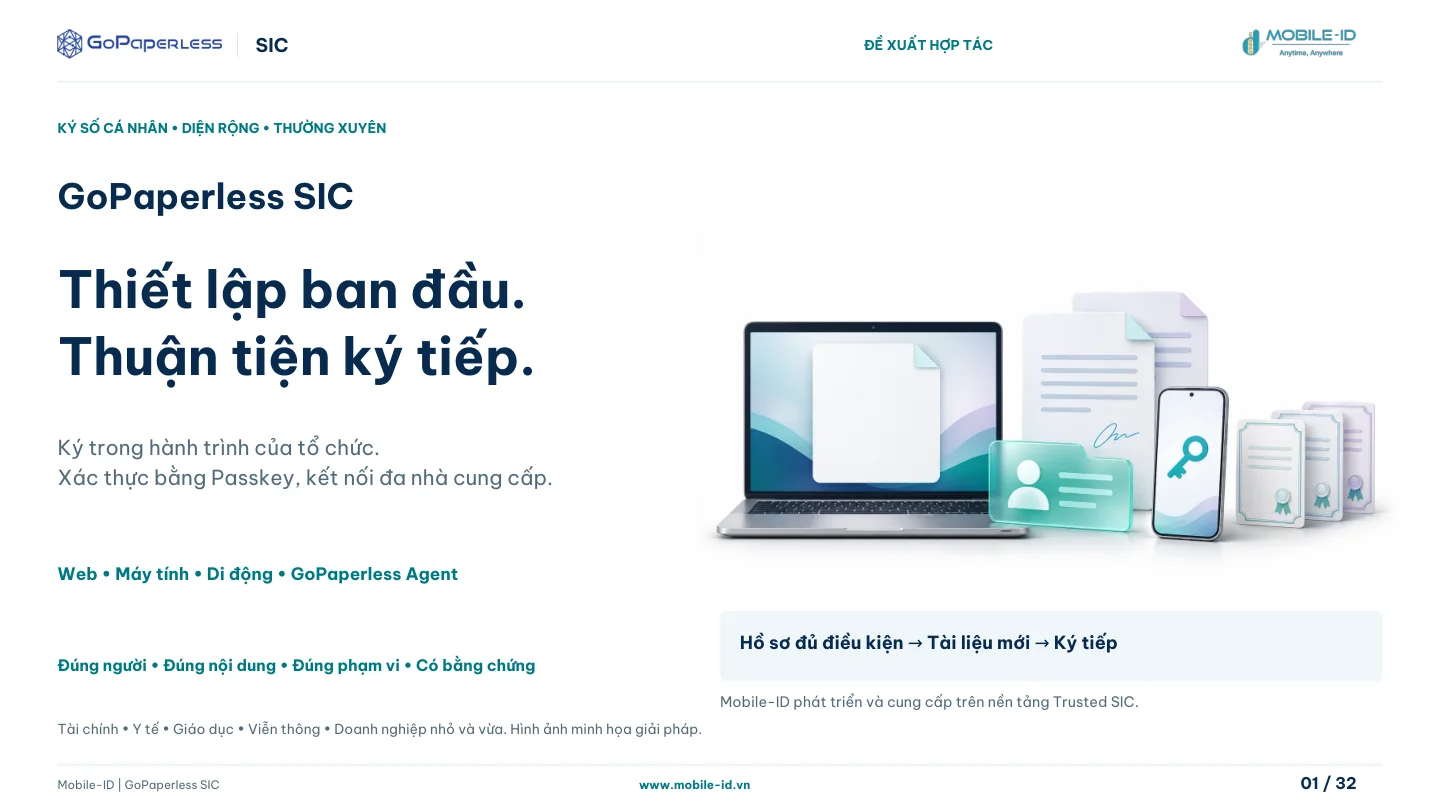
Separates initial signing-profile setup from subsequent signing requests. An eligible profile may be reused, while each new request still binds the person, document, certificate and permission scope.
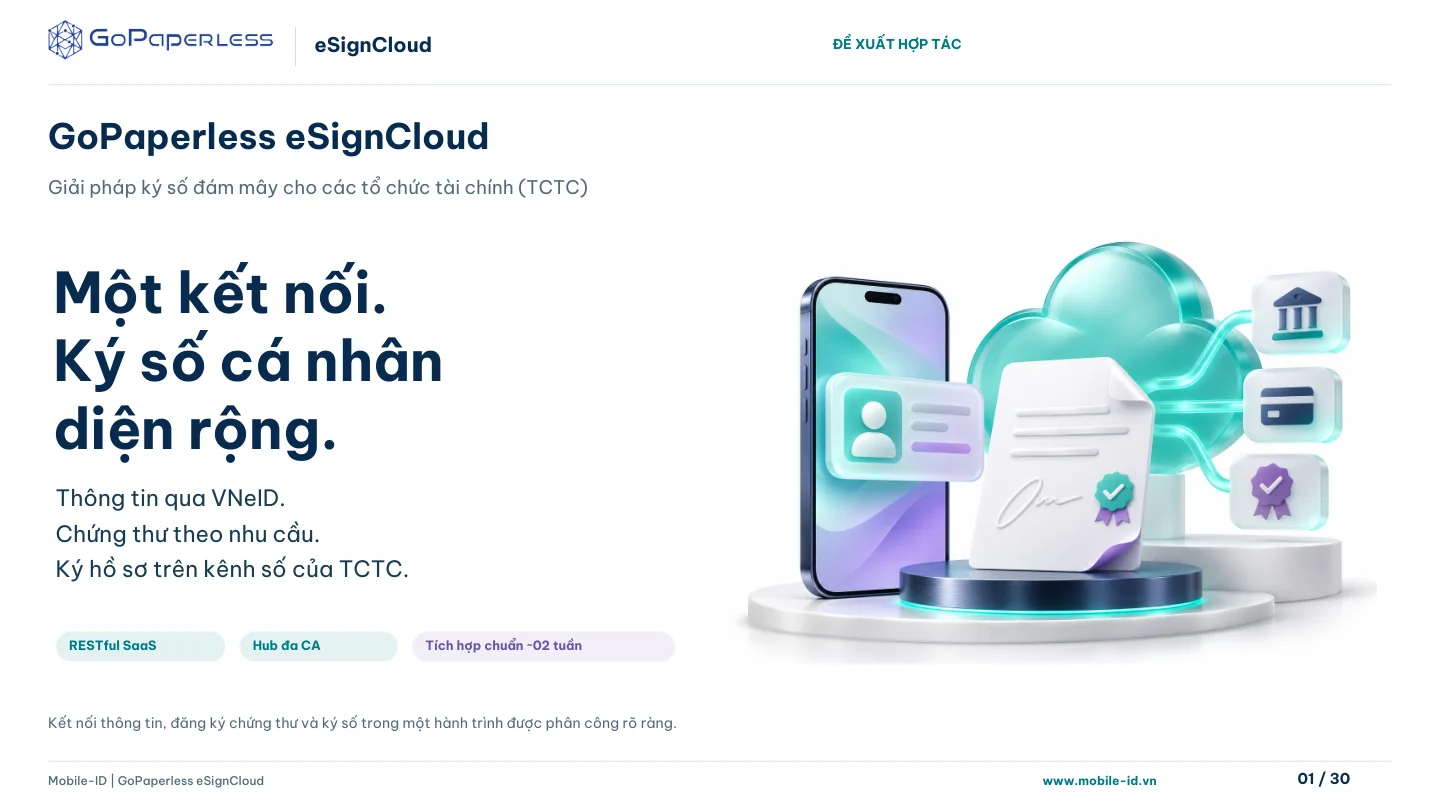
Coordinates service selection, information sharing for certificate registration and financial-document signing. The Hub connects identity and signing routes; the financial institution retains records and business acceptance authority.
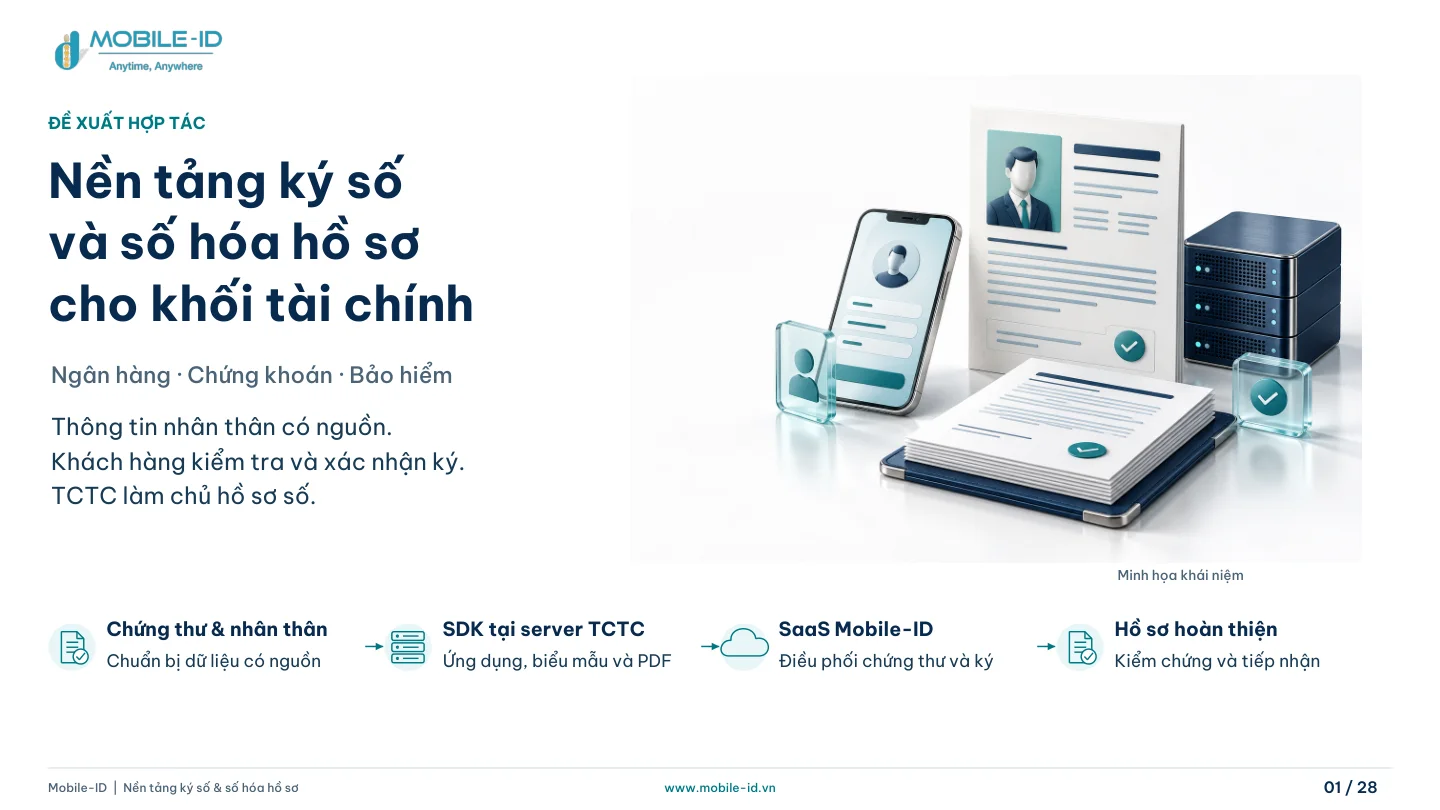
An introductory financial-sector proposal covering identity information through accepted signed records. The reference architecture places integration on the institution server and signing on Mobile-ID SaaS, with explicit authoritative outcomes.
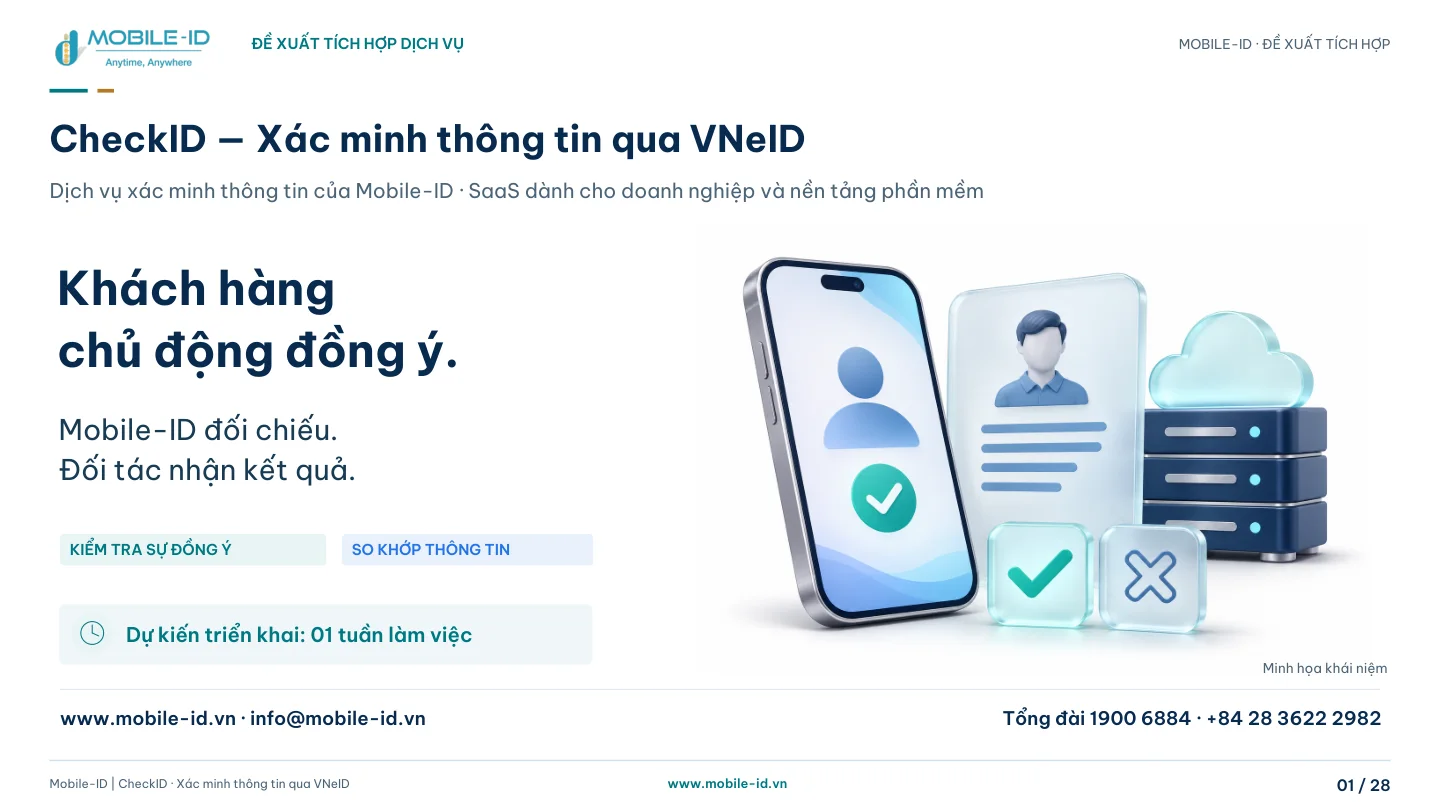
Proposes a server API for consent checking or information matching under a legitimate purpose. The partner submits information for checking; Mobile-ID coordinates and returns outcomes with references rather than source personal data for correction.
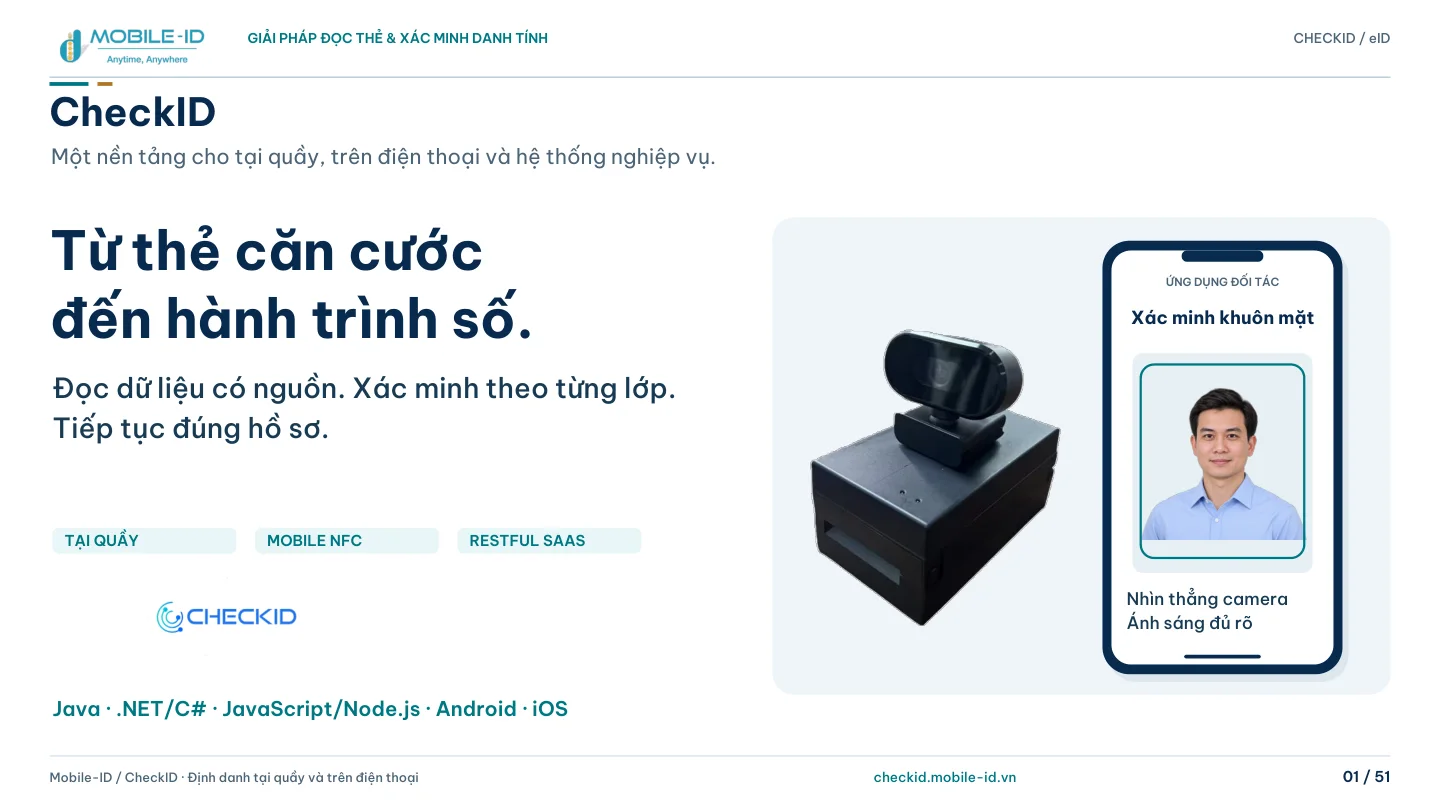
Covers three intake channels: a service desk, a mobile app and a website handing off to an appropriate capture component. It distinguishes card reading, data/chip checks and verification of the presenting person.
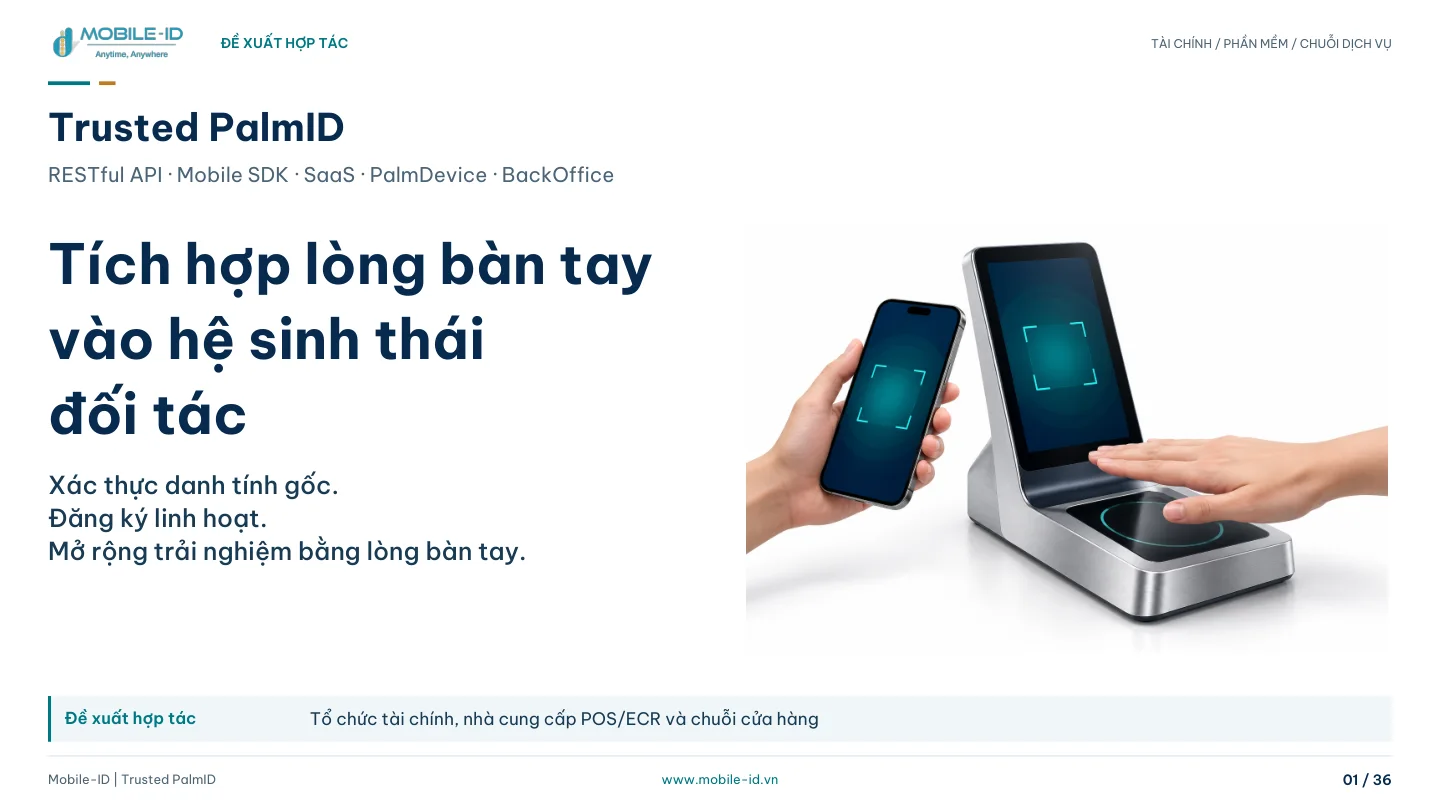
A palm-identity layer for apps, POS and service points. The journey covers identity establishment, enrolment, activation and subsequent verification; partners retain membership, attendance and payment decisions.
Connects admissions, enrolment records, signing and tuition to an existing SIS/school system. Focuses on an eligible case through institution-confirmed enrolment and traceable allocation of collections.
A roadmap for post-quantum cryptography across certificate management, key protection, signing and verification. It separates local signing, server signing and evidence services, prioritising one pilot route rather than claiming ecosystem-wide readiness.
 Knowledge Hub